
Skip to course content
Reach out to us

Build your career with us

brototye_logo

BROTHER YOU NEVER HAD


Packapeer Academy Pvt Ltd

For working developers · 1+ year experience

Engineer
what’s next.
FDE Pro.

Build enterprise AI systems with LLMs, RAG and agents. Learn live, then put the architecture into practice.

Explore the schedule, prerequisites and next cohort.
  • Live expert-led sessions
  • Independent practical assignments
  • Mentor-reviewed capstone
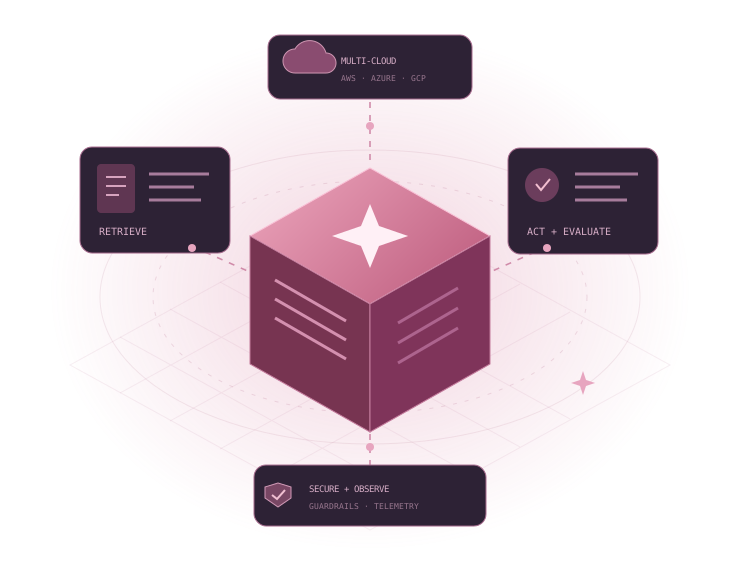
Connected AI architecture linking documents, retrieval, agents and cloud deployment
LLMsAGENTSMULTI-CLOUD

Two schedules.
The same depth.

Both tracks include 48 live instructional hours, plus independent assignments and an enterprise AI capstone. Sessions are live on Google Meet.

6 months

24 weeks · One 2-hour live session each week

Saturday or Sunday

How this track works

Focused weekend learning, architecture walkthroughs, independent assignments, weekend office hours and recorded session access.

4 months

16 weeks · Three 1-hour live sessions each week

Monday, Wednesday & Friday evenings (IST)

How this track works

Steady evening learning, practical implementations, independent assignments, mid-week mentor support and active Slack sprint channels.

Build beyond
a single cloud.

Work across AWS, Microsoft Azure and Google Cloud—from foundation models to deployment, observability, access control and cost management.

Compare the cloud capabilities
Capability AWS Microsoft Azure Google Cloud
Models & Embeddings Amazon Bedrock, Titan, Claude 3.5 Sonnet Azure OpenAI Service, Phi models Vertex AI, Gemini models
Application Deployment Amazon ECS, EKS, AWS Lambda Azure Container Apps, Azure Kubernetes Service (AKS) Cloud Run, Google Kubernetes Engine (GKE)
Observability & Tracing Amazon CloudWatch, AWS X-Ray Azure Monitor, Application Insights Google Cloud Monitoring, Cloud Trace
Secrets & Access Control AWS Secrets Manager, AWS IAM Azure Key Vault, Microsoft Entra ID Secret Manager, Cloud IAM
Cost & Governance AWS Cost Explorer, AWS Budgets Microsoft Cost Management Google Cloud Cost Management, Billing Budgets

From systems thinking
to enterprise AI.

Explore the complete module outline. Live architecture sessions connect to independent implementation work.
Stage A · Modules 1–7

Foundations & architecture

7 modules

Bridge business requirements with production software architectures, asynchronous workflows, and API specifications. Transition from a siloed developer to a forward-deployed engineer who delivers high-leverage client architectures.

TypeScript & Python Async REST & OpenAPI 3.0 Kafka / AWS SQS / GCP Pub/Sub Spec-Driven Development

Module 01FDE Fundamentals and Engineering Mindset

Transition from a traditional software developer to a client-facing Forward Deployed Engineer. Master rapid enterprise delivery and high-leverage engineering decisions.

The FDE operating model vs. traditional siloed engineering
Scoping high-impact technical initiatives & enterprise delivery
Systems thinking, rapid prototyping vs. production rigor
Technical client discovery & stakeholder communication
Module 02Web Development and Technical Foundations

Modern full-stack architecture patterns tailored for real-time, high-concurrency AI applications.

Enterprise TypeScript & Python asynchronous backend architectures
Real-time streaming protocols: Server-Sent Events (SSE) & WebSockets
Modern full-stack patterns for low-latency AI interactions
Contract-driven client-server state synchronization
Module 03Customer Discovery and Problem Framing

Bridge business objectives with technical AI architecture. Master discovery frameworks that uncover high-ROI enterprise use cases.

Technical discovery frameworks & stakeholder interviews
Scoping AI feasibility, constraints & baseline business metrics
Translating unstructured enterprise pain points into technical specs
Defining quantifiable evaluation metrics and success criteria
Module 04Solution Architecture and Rapid Prototyping

Design decoupled, maintainable software architectures and build production-aligned proof-of-concepts (POCs) at high velocity.

High-level system design & modular component boundaries
Architectural trade-off analysis: latency vs. cost vs. throughput
Fast feedback loops: building functional interactive prototypes
Scoping POC-to-Production migration roadmaps
Module 05API Integration and Contract Engineering

Design, document, and integrate resilient distributed APIs across heterogeneous enterprise systems.

RESTful API architecture & OpenAPI 3.0 / Swagger specifications
Resilient integration: retries, exponential backoff & circuit breakers
API contract testing, schema validation & versioning strategies
Multi-tenant rate limiting, throttling & quota enforcement
Module 06Data Integration and Workflow Automation

Build reliable data ingestion pipelines and event-driven automation for enterprise workflows.

Unstructured & semi-structured document ingestion pipelines
Event-driven messaging queues (Kafka, AWS SQS, GCP Pub/Sub)
Asynchronous workflow orchestration & idempotent background tasks
Data cleaning, normalization & enterprise ETL/ELT pipelines
Module 07AI-Assisted and Specification-Driven Engineering

Supercharge software development workflows using modern AI coding assistants and specification-first engineering practices.
Spec-driven engineering: generating robust implementations from architectural specs
Developer productivity tooling & AI-assisted development workflows
Context injection, prompt crafting & unit test harness generation
Automated refactoring, linting & code review pipelines
Stage B · Modules 8–10

LLMs & enterprise RAG

3 modules

Master frontier model APIs, structured outputs, semantic indexing, hybrid search, and automated RAG evaluation. Build grounded AI systems that operate with deterministic outputs and zero hallucination risk.

OpenAI / Claude / Gemini APIs Structured JSON & Zod / Pydantic MongoDB Atlas Vector Search Ragas & DeepEval

Module 08LLM APIs and AI Feature Engineering

Integrate frontier language models into production software with strict reliability, schema adherence, and cost governance.

Interfacing frontier LLM APIs (OpenAI, Anthropic Claude, Google Gemini)
Guaranteed structured outputs (JSON Schema, Pydantic, Zod)
Native function calling & API tool execution
Token budgeting, latency profiling & cost modeling
Module 09Retrieval-Augmented Generation (RAG)

Build production-grade enterprise RAG systems with high precision, grounded semantic retrieval, and low latency.

Chunking strategies, semantic partitioning & embedding models
Vector databases & MongoDB Atlas Vector Search in production
Hybrid search: combining dense vector retrieval with sparse BM25 keyword search
Context re-ranking, semantic caching & hallucination mitigation
Module 10AI Evaluation, Testing and Reliability

Establish empirical benchmarks and automated test harnesses to evaluate LLM outputs and RAG accuracy continuously.

Automated RAG evaluation frameworks (Ragas, DeepEval)
Measuring faithfulness, context relevance & answer correctness
Ground-truth evaluation dataset generation & continuous benchmarking
Non-deterministic testing strategies & production quality gates
Stage C · Modules 11–13

AI agents & security

3 modules

Architect stateful multi-agent systems with standard Model Context Protocol (MCP) tooling, distributed semantic caching, and OWASP Top 10 security guardrails.

LangGraph.js State Graphs Model Context Protocol (MCP) Redis Semantic Caching OWASP LLM Top 10 Guardrails

Module 11AI Agents, Tool Use and MCP

Architect autonomous multi-step AI agents and standardize tool execution using the open Model Context Protocol (MCP).

Agent loop patterns: ReAct, LangGraph & stateful execution
Model Context Protocol (MCP): client and server implementations
Dynamic external tool invocation, database querying & code execution
Multi-agent collaboration, state persistence & human-in-the-loop controls
Module 12System Architecture, Reliability and Cost Optimization

Scale AI microservices for high concurrency while optimizing inference latency and cloud infrastructure spend.

Distributed caching layers (Redis, semantic embedding cache)
Dynamic model cascading (routing between fast SLMs and frontier LLMs)
Fallback mechanisms, rate-limit queues & graceful degradation
Enterprise FinOps: real-time token tracking, quotas & budget alerts
Module 13AI Security, Governance and Responsible Execution

Protect enterprise AI applications from adversarial inputs, secure proprietary data, and ensure regulatory compliance.
Defending against prompt injection, jailbreaks & data exfiltration
Enterprise data governance: PII redacting, data masking & audit logging
Role-Based Access Control (RBAC) & tenant isolation in vector stores
OWASP Top 10 for LLM Applications & compliance frameworks
Stage D · Modules 14–14

Cloud delivery & capstone

1 modules

Deploy containerized AI microservices across multi-cloud infrastructure (AWS, Azure, Google Cloud), set up automated CI/CD and OpenTelemetry observability, and successfully pass the mentor-reviewed Capstone assessment.

Docker & Multi-Cloud CI/CD OpenTelemetry Distributed Tracing AWS + Azure + Google Cloud FDE Readiness Assessment

Module 14Deployment, Observability and Production Operations

Deploy, monitor, and maintain production AI microservices across multi-cloud environments.

Containerization & deployment across AWS, Azure, and Google Cloud
CI/CD automation pipelines for AI applications & vector indexes
Full-stack observability: OpenTelemetry traces, spans & inference metrics
Monitoring token drift, latency anomalies & error budgets

Your enterprise
AI capstone.

Build and deploy an enterprise AI solution, demonstrate its functionality, and present your engineering decisions through a mentor-reviewed assessment.

  1. Problem Framing & Architecture
  2. Production AI Implementation
  3. Hybrid RAG & MCP Agent Workflows
  4. Quality Benchmarks & Guardrails
  5. Multi-Cloud CI/CD & Telemetry
  6. Mentor-Reviewed Assessment
An enterprise AI workflow connecting retrieval, agents and cloud services

Advance your practice.

Live Expert-Led Sessions

Learn advanced AI engineering concepts directly from experienced industry engineers.

Independent Hands-On Practice

Apply the concepts through practical assignments and implementation exercises.

14 Modules + Enterprise AI Capstone

Build an end-to-end AI solution based on a real-world enterprise business problem.

Mentor Reviews & Feedback

Receive architectural guidance, code reviews, and feedback on all assignments.

Enterprise AI Development

Work with frontier LLMs, advanced RAG, autonomous AI agents, and Model Context Protocol (MCP).

Multi-Cloud Deployment

Implement deployment pipelines and cloud operations across AWS, Azure, and Google Cloud.

AI Security, Evaluation & Cost Optimization

Learn to assess AI quality, benchmark reliability, enforce guardrails, and manage token costs.

FDE Readiness Assessment

Demonstrate your enterprise capstone, architectural decisions, and production readiness through a mentor-reviewed assessment.

48 live hours · 14 modules · Enterprise AI capstone

Brototype Course Completion Certificate
Awarded after completing practical assignments and passing the mentor-reviewed capstone assessment.

For developers with 1+ year experience

Your next step
in AI engineering.

Talk to admissions about the FDE Pro prerequisites, upcoming cohorts, and learning schedules.

+91 7034 395 811 ↗

admissions@brototype.com

Let’s talk about your goals

Talk to Admissions

Select your country, then enter your phone number.
Preferred schedule (optional)

We’ll contact you about the course. Read our Privacy Policy.

A little more clarity.

What is FDE PRO?
FDE PRO is an advanced AI engineering program designed specifically for working software developers. It focuses on practical enterprise AI implementation: building production LLM applications, advanced Retrieval-Augmented Generation (RAG), autonomous AI agents using Model Context Protocol (MCP), and multi-cloud deployment across AWS, Azure, and Google Cloud.
Who can join FDE PRO?
FDE PRO is designed for software developers with at least 1 year of professional development experience, including full-stack developers, backend developers, mobile developers, and developers from other relevant IT stacks. Eligible Brototype alumni with the required professional experience may also apply.
Is FDE PRO suitable for beginners?
No. FDE PRO is an advanced AI engineering program and assumes prior professional software development experience. It is not an introductory coding course. Beginners looking to learn programming from scratch should explore Brototype's foundational developer programs.
How do the live sessions and assignments work?
FDE PRO combines live, expert-led instructional sessions with independent hands-on practice. During live sessions, senior tech leads guide you through core architectural patterns, live code walkthroughs, and system design. Between sessions, you apply concepts independently through practical implementation exercises and receive mentor reviews and feedback.
What are the available schedules?
FDE PRO offers two flexible learning tracks designed to work around full-time jobs: a 6-Month Weekend Track (one 2-hour live session per week across 24 weeks) and a 4-Month Weekday Track (one 1-hour live session on Monday, Wednesday, and Friday across 16 weeks). Both tracks deliver identical 48 live instructional hours plus independent practical assignments.
Which AI technologies will I learn?
You will learn frontier LLM APIs (OpenAI, Anthropic Claude, Google Gemini), structured JSON schema outputs, function calling, vector embeddings, MongoDB Atlas Vector Search, semantic caching, hybrid search, RAG evaluation frameworks (Ragas, DeepEval), AI agents (ReAct, LangGraph), Model Context Protocol (MCP), and enterprise security guardrails.
Will I work with AWS, Azure and Google Cloud?
Yes. FDE PRO trains you in multi-cloud architecture and deployment. You will learn to work with foundation models, containerized application deployment, observability, secret management, and cost optimization across Amazon Web Services (AWS), Microsoft Azure, and Google Cloud Platform (GCP).
What will I build during the course?
Throughout the program, you will build practical AI engineering assignments including document ingestion pipelines, hybrid RAG services, and autonomous tool-using agents. The program concludes with an Enterprise AI Capstone where you build and deploy an enterprise AI solution, demonstrate its functionality, and present your engineering decisions through a mentor-reviewed capstone assessment.
What certification can I earn?
Upon successful completion of all practical assignments and passing the mentor-reviewed Enterprise AI Capstone assessment, you will receive the official Brototype Course Completion Certificate certifying your enterprise AI engineering competencies.

FDE Pro

Talk to Admissions

Explore the course, prerequisites and learning schedules.

Select your country, then enter your phone number.
Preferred schedule (optional)

We’ll contact you about the course. Read our Privacy Policy.

FDE Pro

Download Curriculum

Explore the complete 14-module course roadmap.

Select your country, then enter your phone number.

Your curriculum link appears after confirmation. Read our Privacy Policy.